From Rural Roots to Future Doctors: Meet our 2026 Bill Nicholes "Willigobung" Scholarship Recipients
For students raised in regional communities, the path to medicine is often shaped by personal experience and a firsthand understanding of rural healthcare challenges. They are driven not only by a love of science, but by a commitment to serving the communities that raised them.
This year, we are proud to introduce our two exceptional Bill Nicholes "Willigobung" Scholarship for Medicine recipients.
Here, they share what inspired their journeys, the impact they hope to make as future doctors, and how they stay grounded along the way.
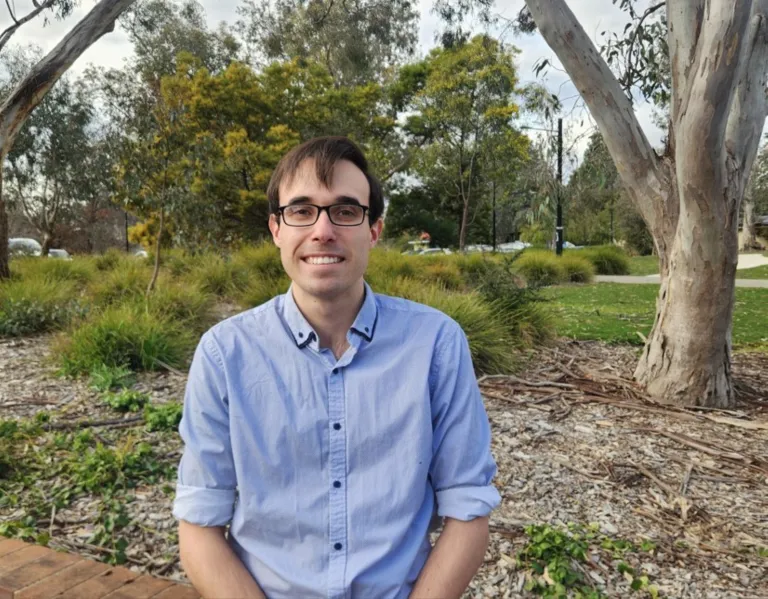
Callum Duncan-Keen commenced the Doctor of Medicine and Surgery program (MCHD) at the School of Medicine and Psychology in 2026.
Why medicine, and what does this scholarship mean to you?
Coming from a regional town like Bathurst, NSW, I didn’t realise medicine was a possibility for me until 2023 during my second year of university at ANU. Growing up, my family relied on the local hospital and NDIS support workers during times of illness, which inspired me to be as kind as possible and help others. Through my medical science courses and volunteering in health and migrant support sectors, I realised how much I loved learning about how the human body works and that I feel truly fulfilled when I’ve made someone’s day a little bit better.
I don’t think I could ever truly articulate how much Mr Bill Nicholes’ generosity means to me. My dream relied on whether I’d be able to financially support myself through 4 years of intense university studies. Mr Bill Nicholes has made it so that I don’t have to worry so much about how I’ll get through medical school. It’s with this scholarship’s support that I’ve been able to take the time to get involved in opportunities like the ANU Rural Medicine Society, and I feel even more committed to giving back to rural communities.
What kind of doctor do you hope to become?
When I remember the patient interactions, I’ve been able to have during medical school and in prior settings, I have really enjoyed my experience with simply talking to patients, learning about them and how they are feeling, and thinking about how I could possibly help in my own small way. For any patient that I see in my life, I’d rather be known as someone who’s really kind than as someone who’s really smart.
In the future, I hope I can serve in different rural communities and learn from them. On top of that, I’m very passionate about getting involved in rural healthcare research and helping figure out ways we can make healthcare more accessible to rural and other under-served communities at a structural and policy level.
How do you recharge outside of your studies?
one of my biggest passions is hiking and trail running around Canberra. I’ve never been able to find anything else as relaxing and freeing as going and exploring the nature that we are so privileged to be so close to in Canberra.
Another thing I’ve been getting more into over the last few years is reality TV shows. Since those shows are so different from anything that I work on or study in terms of seriousness, they are a nice distraction from the stresses and challenges that medical school brings. Lastly, I’ve found that one of the best ways to ground myself is taking the time to
hang out with the amazing and diverse friends that I’ve made in Canberra and the ANU Medical School alongside going and seeing my family in Bathurst whenever I can.
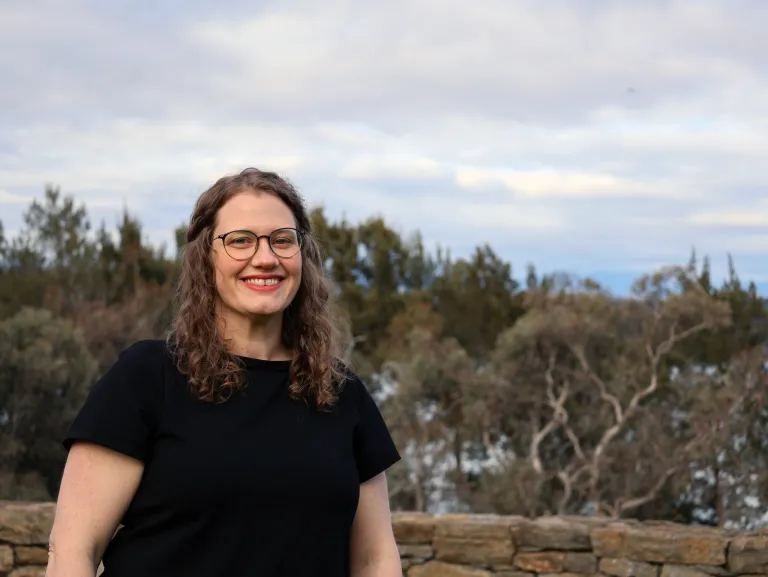
Erica Wynne-Jones is undertaking the Doctor of Medicine and Surgery program (MCHD) at the School of Medicine and Psychology, having commenced her studies in 2026.
Why medicine, and what does this scholarship mean to you?
There was no one moment or experience that made me choose medicine, but I have always been interested in how things work, particularly biology and the human body. Prior to starting medical school, I worked in immunology research. Initially I focussed on understanding the basic biology of the immune system during my honours at the ANU, PhD at the University of Melbourne and postdoctoral studies at the National Institutes of Health in the US. I then transitioned into research and development in the pharmaceutical and biotechnology industries, which allowed me to apply my basic research experience to developing and testing new drugs for oncology patients. I loved working in translational research, but I still felt that my own understanding of what patients actually need was lacking, and that I could contribute to the world in better ways by refocussing my efforts. In my short time in the medical program, focussing on patient needs and having interactions with many amazing new people has led to an overall richer and more meaningful experience of my career and life. Consequently, I am incredibly grateful to have been awarded the scholarship; it primarily supports my healthcare expenses which ultimately has enabled me to continue in the program.
What kind of doctor do you hope to become?
Looking ahead, I hope to be a resilient, empathetic, authentic doctor who improves people’s lives. In my experience, it’s small consistent actions that make the biggest impact on people.
Several years ago, I experienced an acute health incident that resulted in several weeks in hospital, and now ongoing medical care. My favourite healthcare workers throughout this time have been the people who have treated me with compassion through seemingly small actions, like greeting me enthusiastically, holding my hand, laughing with me or just talking to me about other unrelated things. I am grateful for those experiences, not only because they helped me immensely at the time, but also because I see so many opportunities to connect with people that I might have otherwise overlooked or undervalued. In healthcare, I hope to carry that same kindness forward to my future colleagues, patients and their support networks.
How do you recharge outside of your studies?
To keep up with medical school, the most important thing for me is just to take time to notice and appreciate parts of every day. I find joy in learning and through interactions with people in the program, including students, faculty and patients. I appreciate that it is a huge effort on the part of many people to make sure that medical students are supported to learn and I’m lucky to have benefited.
Outside of medical school I love strength training, I typically go four times a week and particularly enjoy sumo deadlifts. I also do various hobbies sporadically including watercolour, sewing, photography and comedy writing, but I’m conscious to keep my hobbies enjoyable by not being very good at any of them.
I also volunteer at Ronald McDonald House, which is a lovely way to care for others and get outside of yourself. Of course, catching up with family and friends regularly is also very important to me.